
The Groom's Timeline: When to Commission Your Wedding Suit (and Why Winter Is the Moment)
In summary
- Spring is Australia's peak wedding season, and a bespoke suit needs roughly three to four months from first conversation to final button, which makes winter the moment for spring grooms to begin.
- A bespoke commission moves through consultation, cloth selection and a series of fittings, and every stage rewards an unhurried schedule.
- If the runway is short, made-to-measure and expertly altered ready-to-wear can still dress a groom beautifully.
The venue was booked a year ago. The celebrant is confirmed, the menu has been tasted, and the band has banked its deposit. And the suit waits. The suit always waits. Yet long after the flowers have wilted and the playlist has been forgotten, the suit is there in every photograph that survives the day.
Spring is Australia's favourite season to marry. From September through November, the weekends fill quickly, and the good venues are claimed a year or more in advance. What far fewer grooms appreciate is that good tailoring is claimed early too. A bespoke suit takes roughly three to four months from first conversation to final button. For a spring wedding, that arithmetic points to one season: winter. This one.
Why the suit deserves better than last place
Hire will always exist for the man who needs a suit by Saturday. But a hired garment is cut for a thousand bodies and belongs to none of them. On the most photographed day of your life, you deserve a garment cut for one body: yours.
Consider what the day actually asks of a suit. A wedding is a marathon in tailoring: hours of embraces, kneeling for photographs, reaching across tables, and a first dance in front of everyone you know. A bespoke suit is built for exactly this, with balance through the back and ease through the chest, so the collar still sits cleanly at midnight.
There is a practical argument too. Unlike the flowers, the cake and very nearly everything else on the budget, a wedding suit outlives the wedding. Choose a versatile cloth and a timeless cut, and it will carry you through anniversaries, race days and every important dinner for a decade to come.
The timeline, working backwards
For an October or November wedding, here is how the months unfold.
Four months out: the consultation. This is a conversation before it is a measurement. We talk about the venue, the formality, the time of day, your partner's outfit and the groomsmen, because a suit for a vineyard at noon is a different animal to a suit for a harbourside ballroom at eight. Then comes the cloth. Browsing the swatches is one of the great pleasures of the process, and spring rewards a little courage: lighter weights, softer shades, a touch of texture.
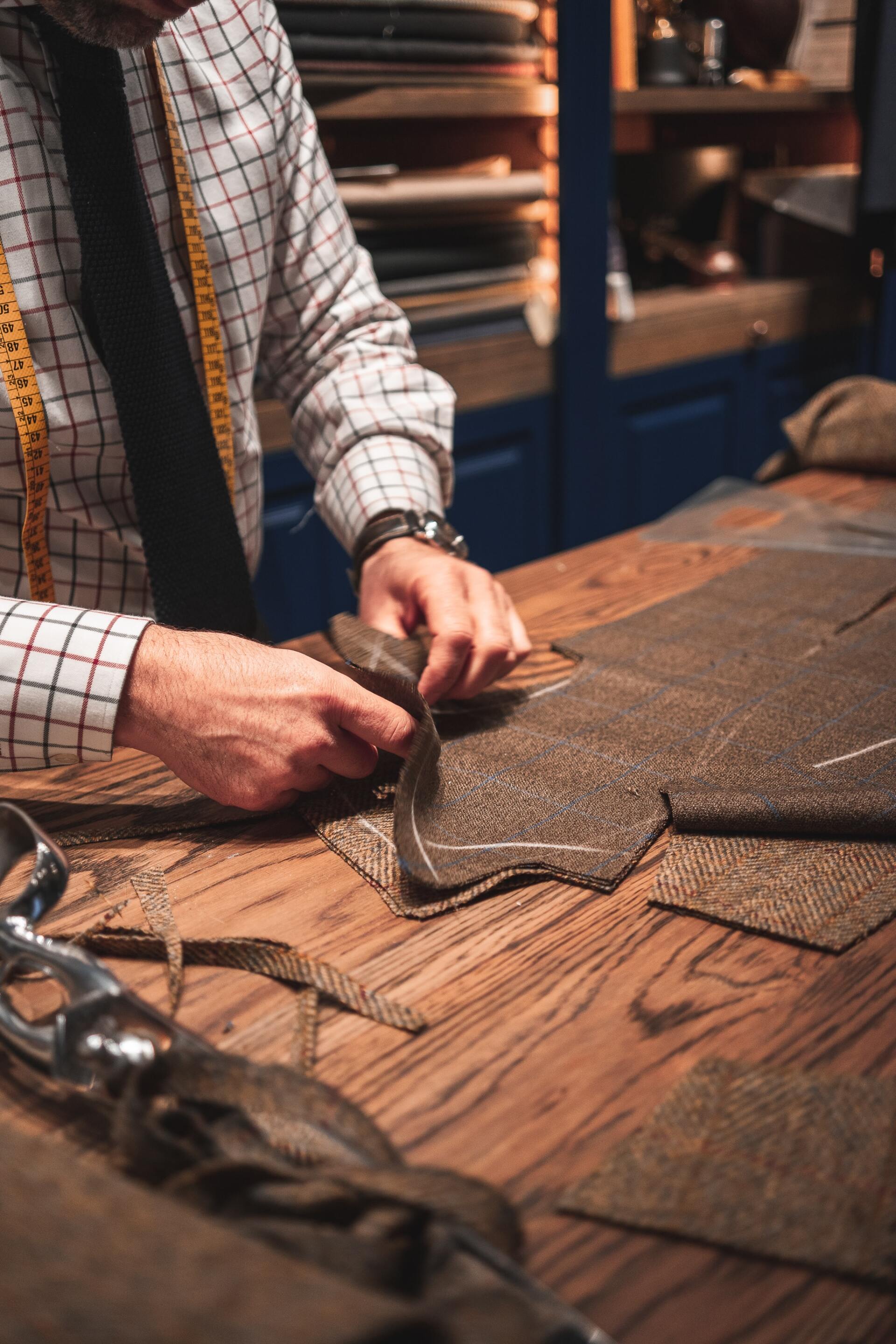
Three months out: the first fitting. The suit exists in skeletal form, and this is where the real tailoring happens. Balance, posture and stance are read and corrected while the garment can still be shaped freely.
Six to eight weeks out: the second fitting. Refinement. Sleeves settle to length, the collar hugs the neck, the trousers find their line.
Three to four weeks out: the final fitting. The buffer here is deliberate. Grooms are famous for changing shape in the months before a wedding, and a sensible schedule absorbs it without drama.
The wedding week. Pressed, finished and collected. Nothing left to do but marry well.
Dressing the groomsmen
The best wedding parties are coordinated through harmony. Identical suits flatten every man into a chorus line, while harmony lets each one look his best as the group reads as a whole. There are two good paths. The party can be dressed together, or each man can bring the best suit he already owns for alterations until it fits the way it should. Unity then comes from the details: matching ties, pocket squares, a shared shade that flatters the setting.
If you have left it late
Honesty matters here. Bespoke needs runway, and a wedding inside eight weeks is too close for a full commission. You can still be dressed beautifully. Our Corneliani ready-to-wear suits are made in Italy and adjusted precisely in-house, and they have rescued more than one groom with grace to spare.
Decisions worth making early
Colour deserves early thought too. Navy remains the great diplomat of wedding tailoring, flattering nearly every setting, season and skin tone, while lighter greys and warm, soft neutrals photograph beautifully against spring greenery. The wisest choice is made with your partner's outfit and the palette of the day in mind, which is precisely the conversation the consultation exists to have.
Consider the waistcoat. A three-piece brings gravitas to the ceremony and lets you shed the jacket at the reception without losing formality. Consider the cloth weight, because a Sydney spring can serve four seasons in a day, and a mid-weight wool handles all of them with composure. And consider the touches only bespoke allows: a lining chosen for meaning, your wedding date embroidered inside the pocket. This is how a suit becomes a keepsake.
Spring weddings are won in winter. Book a consultation at our Bligh Street rooms, and give the suit the head start it has earned.
FAQs
How far in advance should a groom order a bespoke suit?
Allow three to four months from the first consultation to the finished garment. Earlier is always calmer, and it leaves room for the final fitting buffer that every sensible schedule includes.
My wedding is six weeks away. What are my options?
A full bespoke commission is off the table at that point, but you can still be dressed superbly. Corneliani ready-to-wear adjusted in-house, or precise alterations to a quality suit you already own, will both serve you well.
Should the groomsmen wear identical suits?
Aim for harmony over uniformity. Coordinated tones, matching ties or pocket squares, and properly fitted suits will photograph far better than a row of identical hires.
Can I wear my wedding suit again afterwards?
You should. Choose a versatile cloth and cut at the consultation and the suit becomes the anchor of your wardrobe for years, which is one of the strongest arguments for commissioning rather than hiring.
Glossary
Bespoke. A garment cut from an individual pattern drafted for one client, refined over multiple fittings.
Made-to-measure. A garment built from an adjusted standard pattern to a client's measurements, with fewer fittings than bespoke.
Ready-to-wear. A finished garment made to standard sizes, ideally then altered for the individual.
Basted fitting. An early fitting in which the suit is held together with temporary stitches so the cut can still be reshaped.
Cloth weight. The weight of a fabric, usually in grams per square metre, which determines how warm the suit wears and how it drapes.
Three-piece. A suit comprising jacket, trousers and waistcoat.