

Why Looking Sharp is a Smarter Investment Than You Think

Michael Pascalis • August 16, 2025

Why Looking Sharp is a Smarter Investment Than You Think

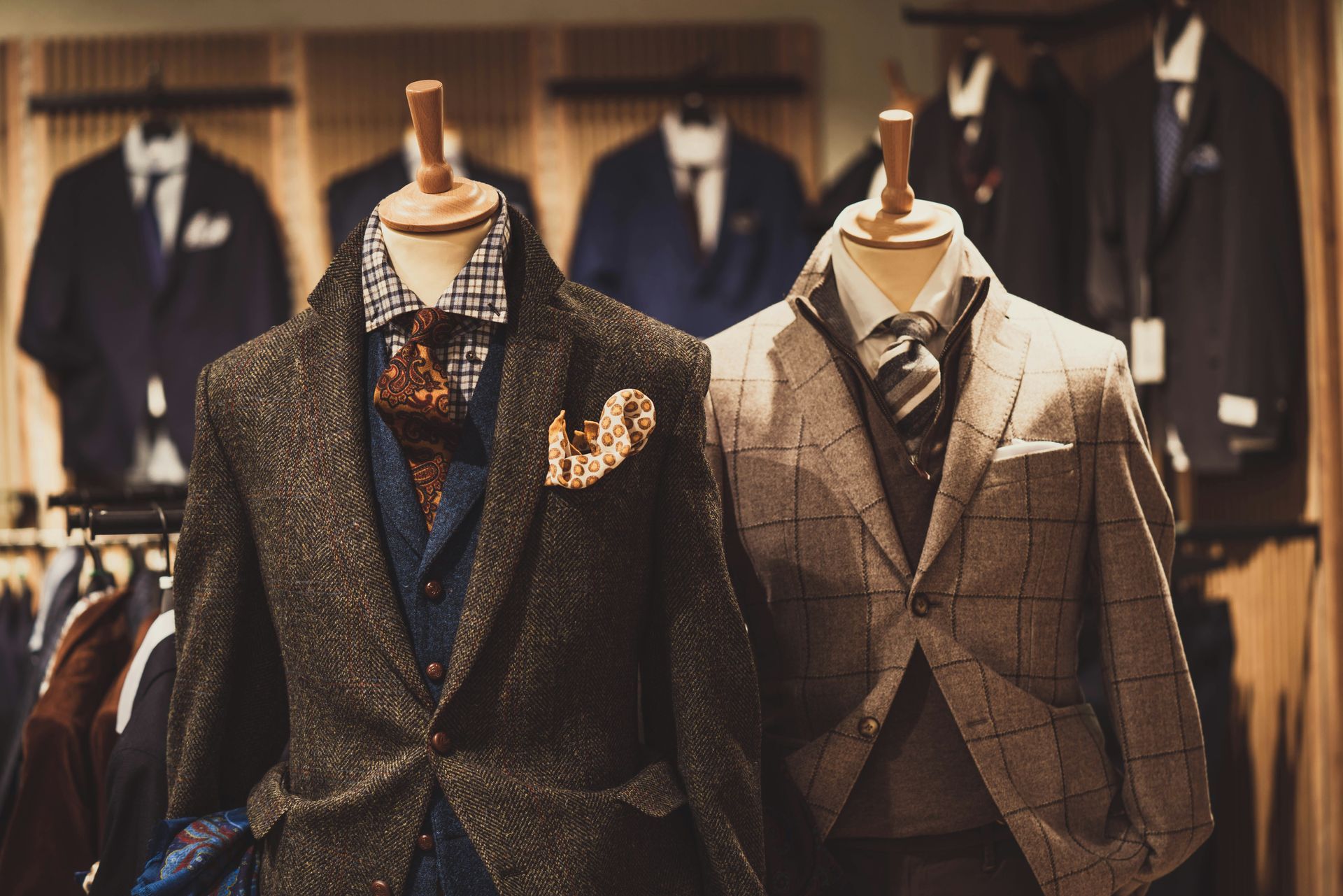
It seems to be so easy to forget the enduring power of a well-made suit. But for those who understand the craftsmanship, durability and long-term value of bespoke tailoring, a quality suit is an investment that continues to pay dividends many times over other purchases you may make.

And like only the best investments, the value of a bespoke suit appreciates over time.

Let’s consider the numbers. Back in 2019, a Pascalis bespoke suit with an extra pair of trousers cost around $3,500. Today, replacing that same suit, using the same Italian fabric, hand-finished craftsmanship, and made right here in Australia, would set you back close to $7,000. That is, of course, a reflection of many very real changes: rising fabric costs, increased wages for skilled artisans, higher overheads and general inflation.

But here’s the thing: while the cost of making the same suit has doubled, and will likely double again a decade down the track, its utility hasn’t diminished one bit. If you bought that suit five years ago, and you’ve taken good care of it, it still fits, still turns heads, and still earns compliments. 

In other words, that purchase that you may be considering today will be a bargain compared to what you’ll need to pay down the track.

The same can’t be said for many other high-value purchases.

Consider this: in 2019, you might’ve also bought a car for $35,000. That vehicle, even with the most careful ownership, might fetch you $10,000 on resale today. Meanwhile, in 2029, you’ll still be buying vehicles, likely with even more features and better specs, for roughly the same. 

Cars, computers, electronics and other commodities are things that you buy and replace, knowing full well that their value declines and is made redundant every time a new model gets released. 

But your suit? It still wears like it did when you bought it. In fact, if it's bespoke, it likely fits even better now, as it is shaped by time and tailored to you alone.

One recent experience at the studio illustrates this perfectly. A long-time client brought in four made-to-measure suits he had purchased more than 20 years ago. Two were Ermenegildo Zegna, one was an I.C.E.R, and the last, a Canali. Despite their age, the suits were in excellent condition. They allowed for a timeless silhouette, were cut from premium fabrics, and exchibited quality workmanship ensured they looked just as sophisticated today as they did two decades ago. To replace them now would be upwards of $40,000.

These suits weren’t just hanging in a wardrobe, either. They were still in rotation, worn with pride and purpose. That’s the kind of return no car or mass-market jacket will ever offer.

The truth is, bespoke doesn’t date. While fashion trends come and go, classic tailoring transcends them. A well-cut suit in a refined cloth is always in style, whether you’re walking into a boardroom or a black-tie event. And unlike many other garments, a bespoke suit adapts to your life, both in physical fit and professional function.

So let’s get practical. In today’s workplace, where business attire is evolving and many people are working from home, does a suit still matter?

Absolutely.

Because when you do need to dress up, whether for a meeting, presentation, wedding or event, you want to be remembered. And first impressions still count. No one compliments your car in the boardroom, but they will notice a well-fitted jacket, a sharp shoulder line, a cloth that drapes just so.

Suits also simplify things. Once tailored, a suit becomes the easiest item to wear. Shirt, trousers, jacket, and you’re done. No need to worry about matching items or switching styles. It’s a uniform of confidence.

And while fast fashion deteriorates quickly, both in quality and aesthetic, bespoke tailoring offers longevity. You don’t buy bespoke often, but when you do, it lasts. And lasts.

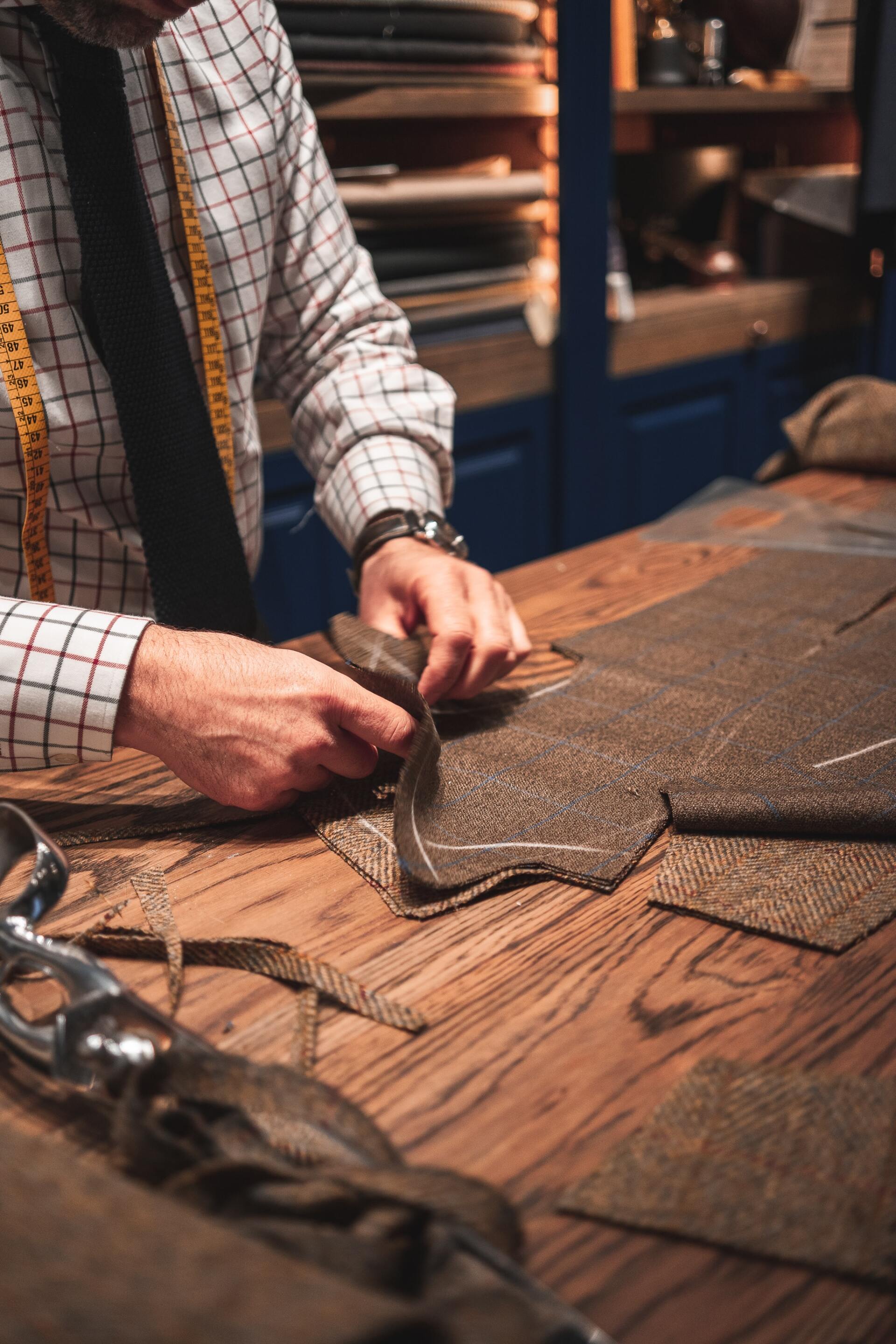
At Pascalis, we believe in timeless elegance. That means garments built to endure. We craft each piece with precision and passion, using fabrics selected not for trends, but for character and quality. Our suits aren’t made to be replaced every season. They’re made to be relied upon, refined, and re-worn.

So yes, $7,000 might seem steep when you first hear it. But in the context of value, not just price, it’s a bargain. It’s 20 years of wear, a decade of confidence, five years of boardroom wins.

Most of all, however, a suit will never be cheaper than it is today. Why not get in now and save yourself a 100% markup (if not more) a decade from now?
Smarter tailoring
By Michael Pascalis October 24, 2025
Smarter tailoring, breathable fabrics, and better cuts keep you cool and professional—without resorting to shorts at work.
October 22, 2025
The conversation about summer dressing too often circles back to gimmicks. Shorts in the office, polo shirts in the boardroom, but these are symptoms of a deeper problem: we have forgotten how to make and wear proper clothing for the climate we live in. A summer suit, chosen with care, remains the most elegant answer. But not all suits are created equal. If the heat leaves you dreaming of linen drawstrings, it’s not the suit’s fault. It’s the wrong suit. Here are eight considerations that turn summer tailoring from punishment into pleasure. 1. Fabric First The single most important decision is fabric. Natural fibres are non-negotiable. Polyester and other synthetics trap heat and suffocate the skin; they are cheap in every sense of the word. Tropical wool, with its fine yarn and open weave, has been the quiet hero of summer tailoring for decades. Linen, either pure or in a wool blend, brings unmatched breathability and texture. Cotton offers a crisp alternative for the more casual office. The principle is simple: fabric should breathe. 2. Lightness of Weave Weight is not enough; weave matters too. A dense cloth, no matter how fine, will feel like armour in January. Fresco, hopsack, and other open-weave constructions let air circulate without sacrificing drape. They prove that you don’t need to bare skin to keep cool. 3. The Case for Unlined Jackets Every layer in a suit traps heat. A fully lined jacket in the peak of summer is as unnecessary as it is uncomfortable. Half-lined or unlined jackets offer structure without insulation. Stripped back to its essentials, the jacket still frames the shoulders, flatters the waist, and gives shape, only now it does so without suffocating the wearer. 4. Rethinking Fit The tyranny of the skinny suit has done more to ruin summer dressing than the thermometer ever could. Narrow lapels, shrunken jackets, and trousers cut like leggings may look sharp in shop windows, but in the real world they cling, sweat, and stifle. A summer suit demands room to breathe: a touch more fullness in the chest, pleats in the trousers, a slightly longer rise. These small concessions to airflow make all the difference. 5. Freedom of Movement Tailoring was never meant to be restrictive. The best summer suits allow ease: side vents that open as you walk, trousers that fall cleanly without gripping the thigh, shoulders that move without resistance. Comfort is not the enemy of style, but rather it is its foundation. 6. The Role of Colour Summer is no time for charcoal and midnight navy. Dark cloth absorbs heat and looks heavy against the season’s light. Pale grey, beige, sky blue are shades that reflect the sun and signal ease. Seersucker, with its puckered surface, even lifts the fabric off the skin to create tiny channels of air. If ever there was a fabric designed for August, this is it. 7. Care and Longevity Summer is unforgiving. Suits face sweat, humidity, and relentless sun. The careless solution is cheap rotation: buy more, wear them out, throw them away. The wiser approach is investment. A well-made summer suit, rested between wears and hung to air, will last for years. Quality not only looks better, it endures. 8. Dressing with Intent The final consideration is not technical but philosophical. A summer suit is more than cloth and cut. It is a statement that professionalism need not wilt in the heat, that respect for the occasion is not seasonal. To wear one well is to prove that elegance adapts. Shorts may make headlines; tailoring makes an impression. There is nothing radical about suggesting that a summer suit can be cool, comfortable, and dignified. It has always been possible. The knowledge is there, in the choice of fabric, the looseness of cut, the restraint of lining, the play of colour. What is required is not reinvention but remembrance: a return to tailoring that understands climate rather than fights it.  Eight considerations for made to measure suits for summer, then, but really one principle: good clothes work with the body, not against it. And in the heart of summer, a well-made suit is not a contradiction. It is liberation.
By Michael Pascalis August 16, 2025
From resizing beloved pieces to reviving vintage craftsmanship, learn why old clothes deserve a second life with professional tailoring.
By Michael Pascalis June 4, 2025
Learn how many shirts a professional man needs, which colors are essential, and how to build a versatile shirt collection for work and weekend wear.
By Michael Pascalis June 4, 2025
Discover how traditional tailoring has preserved its artisanal techniques for over 200 years.
By Michael Pascalis November 18, 2024
Menswear fashion seems to be fading, and yet there are so many good reasons to have a suit. Learn more with Pascalis
By Michael Pascalis November 18, 2024
The Weather is Heating Up. Time to Dress Down, Right? (Wrong!)
The Vest | Pascalis
By Michael Pascalis October 29, 2024
Too often the vest is overlooked when it comes to the modern suit. It shouldn’t be. Learn about the value that a vest brings to modern suits with Pascalis
By Michael Pascalis September 2, 2024
Sydney is becoming increasingly casual, but what does this mean for work places? It might actually be a bigger problem than you think.
Rather than buy cheap, wasteful fast fashion, why not consider garments that are made to last?
By Michael Pascalis July 23, 2024
Rather than buy cheap, wasteful fast fashion, why not consider garments that are made to last?